
POST 1
#astronomyatschool #astronomywithrahul #astronomy #sciencepopularization #popularscience
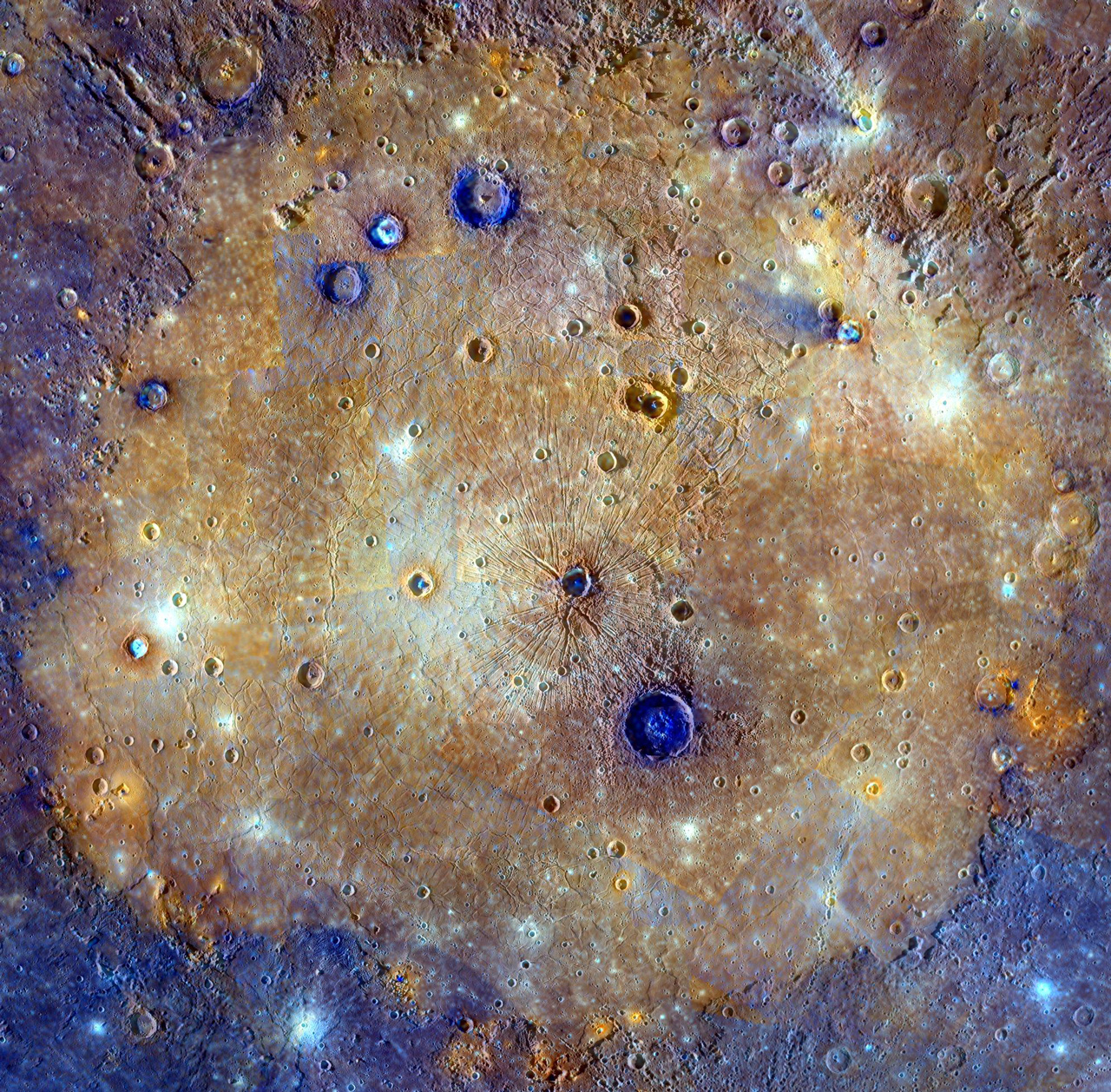
This is the spectacular Caloris Basin in the planet Mercury. The absence of a thick atmosphere (it is too small, and too hot during the day, to have an atmosphere) on the planet leaves it exposed to space debris and hence the surface of Mercury is riddled with craters. Craters larger than 300 Km in diameter are called basins. Caloris is 1525 Km in diameter, (On the map of India, that would be roughly the distance from Kolkata to Indore, the way the crow flies!!) with 1.6 Km high mountains around the edges!
“This mosaic of Caloris basin is an enhanced-color composite overlain on a monochrome mosaic featured in a previous post. The color mosaic is made up of images obtained when both the spacecraft and the Sun were overhead, conditions best for discerning variations in brightness. The monochrome mosaic is made up of images obtained at off-vertical Sun angles (i.e., high incidence angles) and with visible shadows so as to reveal clearly the topographic form of geologic features.
The combination of the two datasets allows the correlation of geologic features with their color properties. In portions of the scene, color differences from image to image are apparent.
Caloris basin has been flooded by lava that appear orange in this mosaic. Post-flooding craters have excavated material from beneath the surface. The larger of these craters have exposed low-reflectance material (blue in this mosaic) from beneath the surface lavas, likely giving a glimpse of the original basin floor material.”
Source: NASA, image and quotes.
Caloris is 1525 Km in diameter, (On the map of India, that would be roughly the distance from Kolkata to Indore, the way the crow flies!!) with 1.6 Km high mountains around the edges!
 CosmosMusings